 |
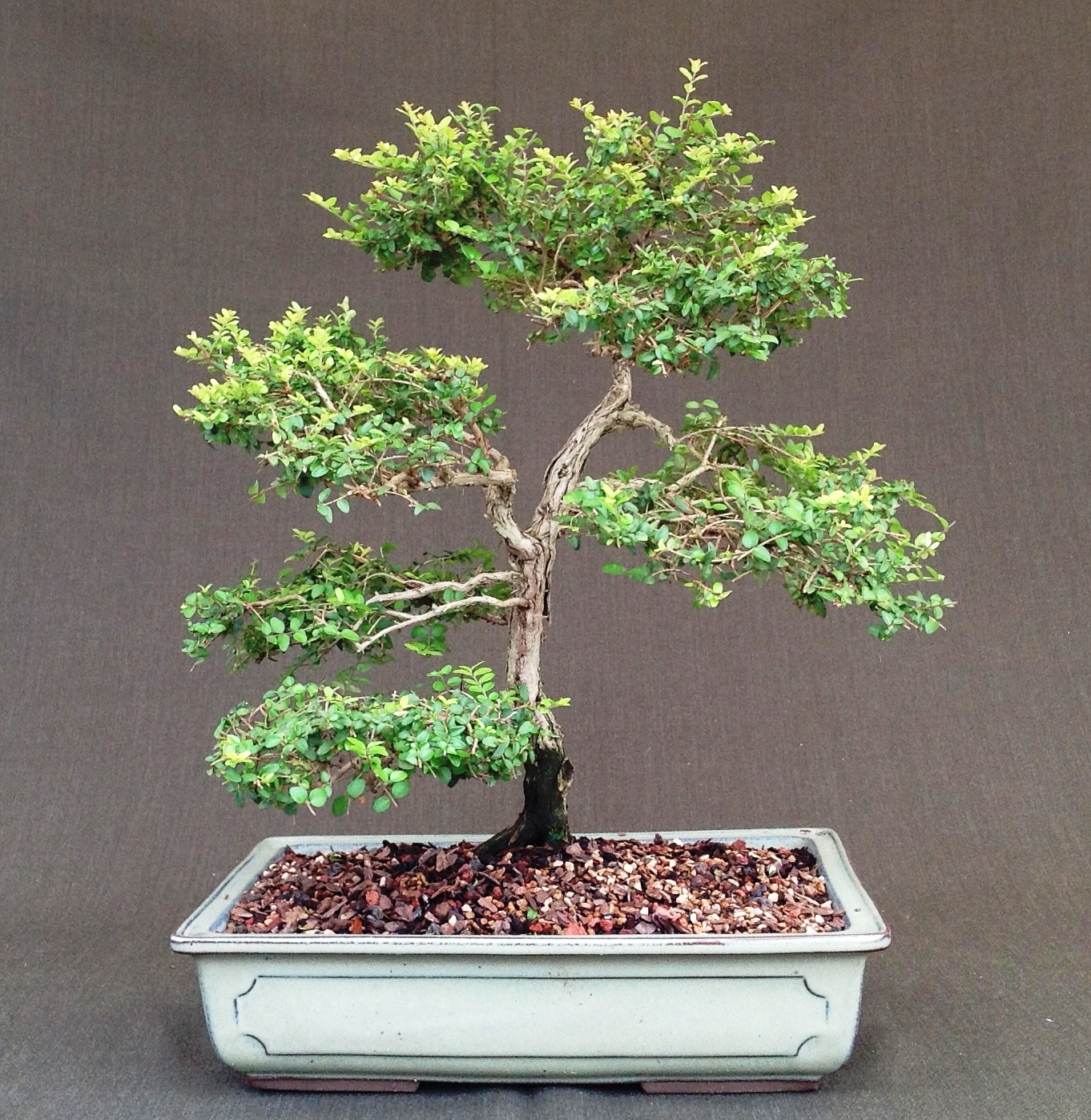
Ming Aralia |
This page will
feature a growing collection of bonsai plant material description and
infomation on care and culture.
While originally written for the North Alabama micro-climate in the
Tennessee Valley region
of the southeastern United States,
these articles should apply for other medium - high humidity areas in USDA
agricultural zones seven and eight.

Ming Aralia
Polyscias fruticosa
Ming Aralia is a perennial evergreen, seen in the form of a shrub or
dwarf tree, native to India.
The genus is tropical, with some 80 species found in the Pacific
islands and Southeast Asia. The plant grows
fairly slowly but can reach up to 3-7 feet in height. The
family to which Ming Aralia belongs - Araliaceae, the aralia,
or ginseng, family - also includes a number of popular house plants
such as English Ivy, as well as the herb Ginseng.
Polyscias stalks carry compound leaves with up to seven (or more)
opposite leaflets. In several species the leaves
are deeply lobed. The leaves are also highly variable,
sometimes on the same plant, and are frequently variegated.
The Plumata variety of Ming Aralia is a feathery form with small
leaves, and is excellent for bonsai culture.

Light:
Ming Aralia will tolerate low light conditions such as a
north window with a small supplementary light
used
for the daylight hours; however, it will grow more compactly under
brighter light conditions. If grown outdoors,
exposure to direct sun should be done very gradually, and should be
limited to morning sun only.
Hardiness:
Ming Aralia thrives in warmth, preferring a temperature
range between 60 and 85 degrees Fahrenheit.
As described, it may be grown outdoors during the warm
months.

Watering:
Indoors, watering frequency will depend on temperature and
humidity levels and the moisture
retention rate of your growing mix. Slowly apply a fine
sprinkle to the root system until the entire root mass is
completely watered, and water freely runs out of the drainage
holes. Allow the top of the growing medium to
become dry between waterings. Do not allow the plant to
remain in standing water over a long term. Outdoors,
in warm weather, your plant will usually require daily watering.

Feeding:
Water-soluble balanced fertilizers provide adequate food for
your Ming Aralia. Follow the label
recommendations of dilution and frequency provided for house
plants. Unless new growth is pale, indicating a
deficiency, it is not general practice to fertilize during the coldest
and shortest days of the year.
Styling:
Ming Aralia has a vertical habit, but it can be styled into an
attractive bonsai by selecting alternate
branches, and wiring them laterally. You may be able to leave
the wire on for several months, or perhaps a year,
but check at three-month intervals to remove any wires that may be
cutting into the branches or trunk. You may
shorten the plant by removing the top growth and wiring a branch upward
for a new apex. If you are growing your
plant near a window, rotate it periodically to expose all areas to the
outdoor light.

Potting:
Ming Aralia should be repotted during the warm growing
season. Follow the procedures for potting
and
repotting bonsai. If you are placing your plant in bonsai
soil
for the first time, try to remove all the fine soil from
the root system so the growing medium will be consistent for all parts
of the root system. Plants may react to repotting
or change of location by dropping numerous leaves. Remove all
yellow and wilting foliage to allow light to reach new
replacement growth, and avoid over-watering while the plant is
recovering.

Pests:
Check and/or treat new purchases and plants being
transferred from outdoors to indoors. The usual range
of pests; aphids, scale, and spider mites may attack Ming Aralia
plants. Use an insecticide listed for the particular
pest you are treating, and move the plant outdoors for
treatment. You will need to apply several treatments at
five- to ten-day intervals to completely eliminate the pests.
If you grow moss on the surface of your plantings, you may
see fungus gnats emerging from the area. A rechargeable hand
vacuum is excellent for keeping them under control.
.... more information COMING SOON! ....